 Space Launch Now
Upcoming Launches
All upcoming launchesLoading launches
 National Aeronautics and Space AdministrationMixed resultHuman Exploration
Saturn V
Launched 1968-04-04 12:00:01 UTCLaunch Complex 39A, Kennedy Space Center, FL, USA
No cause has been given yet.
Partial failure
Target: Elliptical Orbit
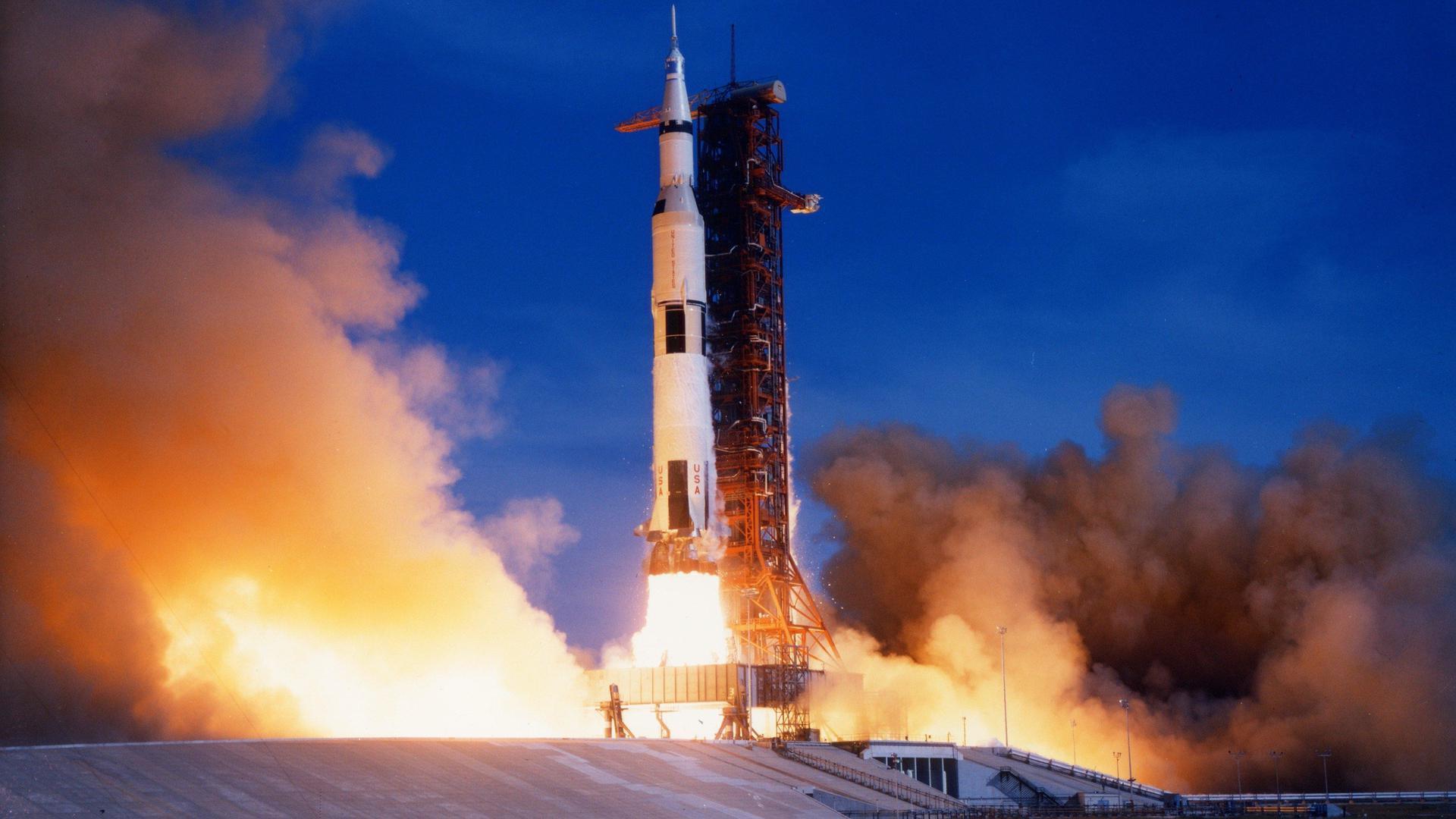
Saturn V lifted off with Apollo 6, but the launch was only a partial success.
Next
Waiting on the Cause
No cause has been given yet. What National Aeronautics and Space Administration finds will be added here, and to the updates below.

Apollo 6 was intended to send a Command and Service Module (CSM) plus a Lunar Module Test Article (LTA), a simulated Lunar Module (LM) with mounted structural vibration sensors, into a translunar trajectory. However, the Moon would not be in position for a translunar flight, and the Service Module engine would be fired about five minutes later to slow the craft, dropping its apogee to 11,989 nautical miles (22,204 km) and causing the CSM to return to Earth, simulating a "direct-return" abort. On the return leg, the engine would fire once more to accelerate the craft to simulate the nominal lunar return trajectory with a re-entry angle of -6.5 degrees and velocity of 36,500 feet per second (11,100 m/s). The entire mission would last about 10 hours.
Launch Provider
Government · United States of America · Founded 1958 · Administrator Jared Isaacman
The National Aeronautics and Space Administration is an independent agency of the executive branch of the United States federal government responsible for the civilian space program, as well as aeronautics and aerospace research. NASA have many launch facilities but most are inactive. The most commonly used pad will be LC-39B at Kennedy Space Center in Florida.
Launches
142
Successful
122
86%
Upcoming
5
scheduled
Height
110.6m
Diameter
10.1m
To low Earth orbit
140,000kg
Liftoff thrust
35,100kN
Space Launch Now for iOS and Android
Follow National Aeronautics and Space Administration to hear when findings come out and when Saturn V flies next.