 Space Launch Now
Upcoming Launches
All upcoming launchesLoading launches
 Soviet Space ProgramLaunch SuccessfulHuman Exploration
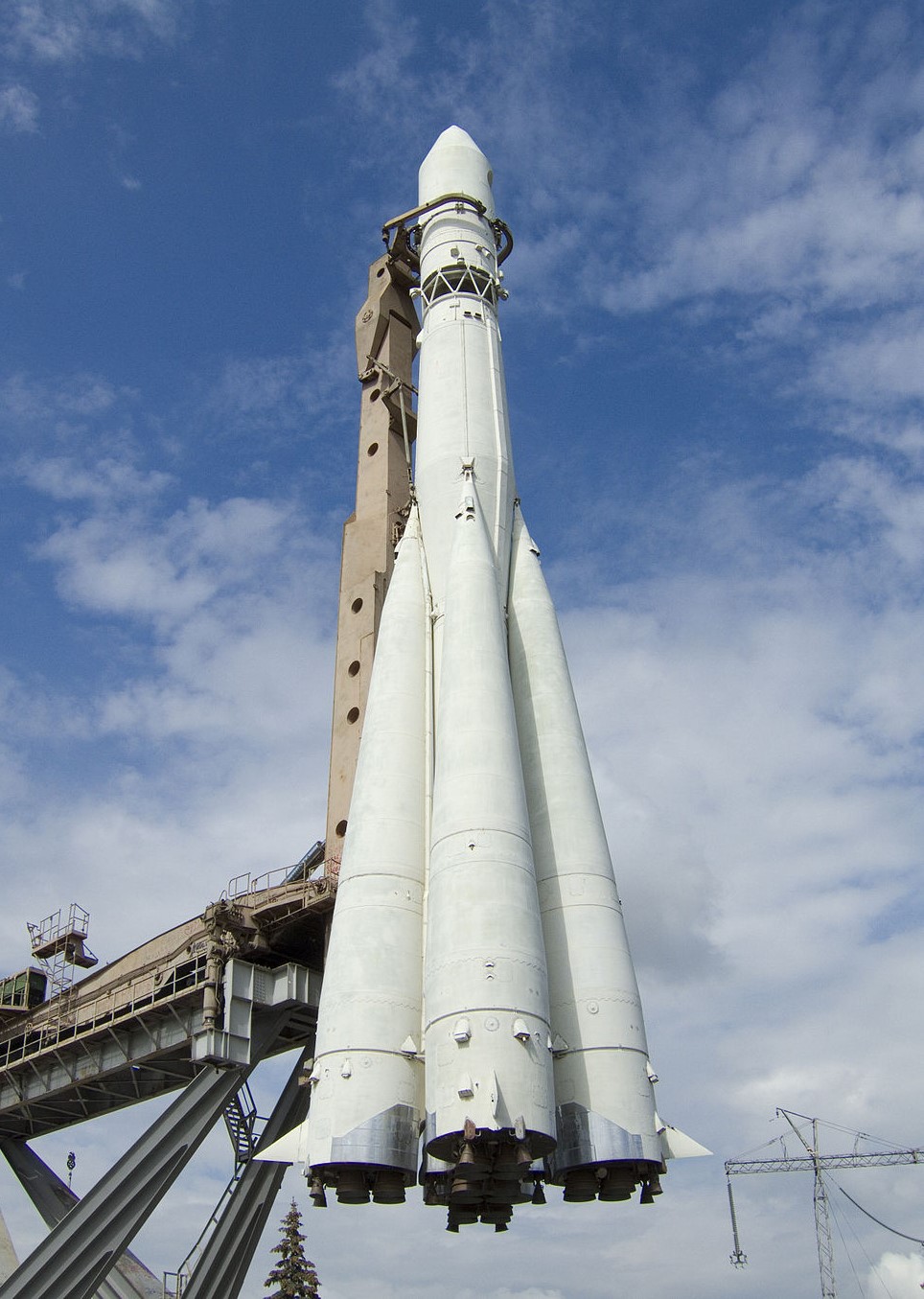
Vostok-K
Launched 1962-08-11 08:30 UTC1/5, Baikonur Cosmodrome, Republic of Kazakhstan
Success
Reached Low Earth Orbit
Worldwide
44th
orbital launch attempt in 1962
Soviet Space Program
9th
launch this year
1/5
4th
launch from this pad this year
Pad turnaround
13 d 23 h
since the pad's previous launch
Vostok 3's mission goal was to test human body's ability to function in weightlessness and to test the Vostok 3KA spacecraft for longer flights. They also tested craft-to-craft communications by launching Vostok 4 a day after Vostok 3. Their trajectories brought them approximately 6.5 km from each other and cosmonauts were able to communicate via radio. This also marked the first time more than one crewed craft was orbiting earth at the same time. The spacecraft carried cosmonaut Andriyan Nikolayev to orbit where he orbited Earth 64 times before reentering. The mission lasted for 3 days 22 hours & 28 minutes.
The Soviet space program, was the national space program of the Union of Soviet Socialist Republics (USSR) actived from 1930s until disintegration of the Soviet Union in 1991. The Soviet Union's space program was mainly based on the cosmonautic exploration of space and the development of the expandable launch vehicles, which had been split between many design bureaus competing against each other. Over its 60-years of history, the Russian program was responsible for a number of pioneering feats and accomplishments in the human space flight, including the first intercontinental ballistic missile (R-7), first satellite (Sputnik 1), first animal in Earth orbit (the dog Laika on Sputnik 2), first human in space and Earth orbit (cosmonaut Yuri Gagarin on Vostok 1), first woman in space and Earth orbit (cosmonaut Valentina Tereshkova on Vostok 6), first spacewalk (cosmonaut Alexei Leonov on Voskhod 2), first Moon impact (Luna 2), first image of the far side of the Moon (Luna 3) and unmanned lunar soft landing (Luna 9), first space rover (Lunokhod 1), first sample of lunar soil automatically extracted and brought to Earth (Luna 16), and first space station (Salyut 1). Further notable records included the first interplanetary probes: Venera 1 and Mars 1 to fly by Venus and Mars, respectively, Venera 3 and Mars 2 to impact the respective planet surface, and Venera 7 and Mars 3 to make soft landings on these planets.
Launches
2,456
Successful
2,288
93%
Upcoming
0
scheduled
Height
30.8m
Diameter
3m
To low Earth orbit
4,725kg
Liftoff thrust
971kN
Space Launch Now for iOS and Android
Notifications before every launch you follow, live countdowns on your home screen and watch, and webcasts as they start.